A website is not the goal, but the means.
Many entrepreneurs still see their website as something that “just needs to be there.” Because yes, it is 2026, and nowadays you need a website. But in reality, a good website is not a goal in itself, but a means to an end. It is an online marketing tool that helps you reach the right audience, tell your story online, and build trust. When used in the right way, your website becomes a route that guides visitors towards the desired action. That is why it is essential to consider what you want to achieve with your website: more sales, more enquiries, building authority, and so on. Not to impress, but to achieve results that contribute to your goals.
The difference between beautiful and effective
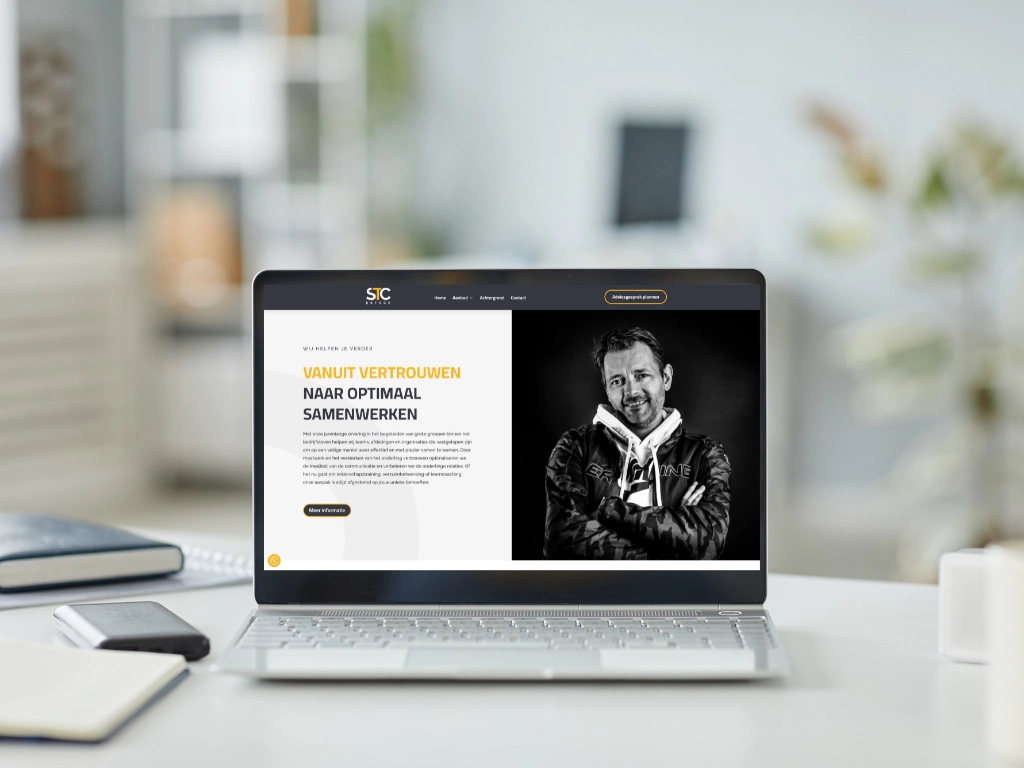
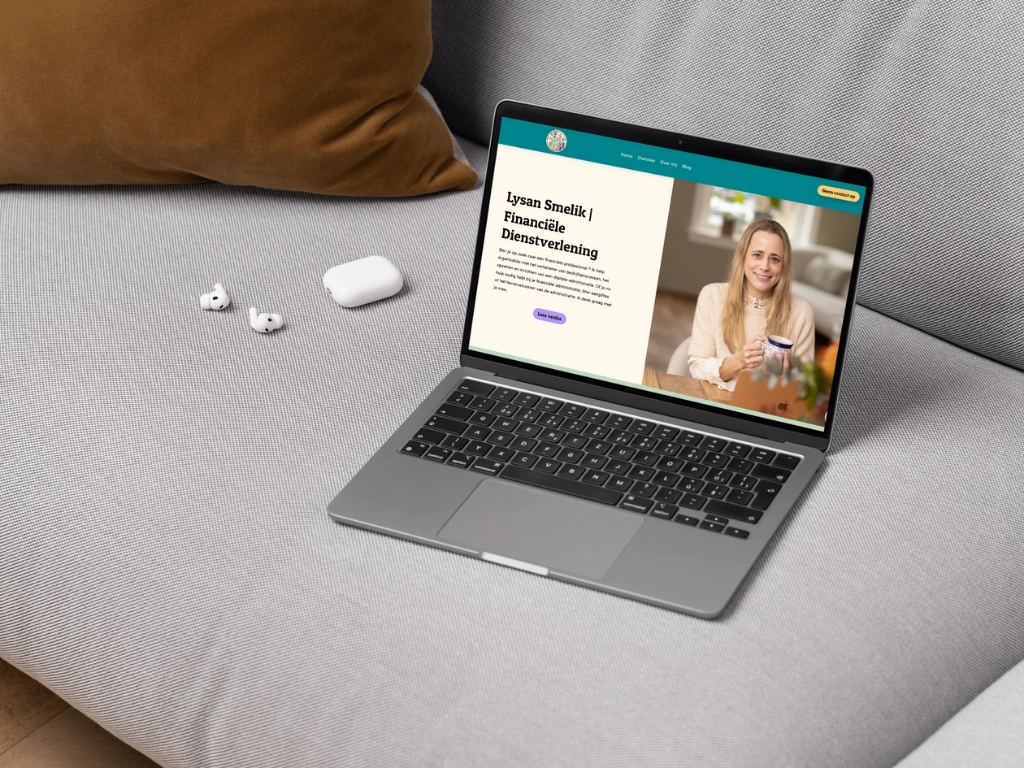
Let’s be honest. A beautiful design stands out. No one enjoys looking at a visually unattractive website. But the process that follows is perhaps even more important. After the first impression, you want to be able to guide the behaviour of your visitors. And for that, you need more than just an attractive design — you need a website that is built to be effective. You want to guide visitors towards that right action we mentioned earlier. You want them to contact you, request a demo, fill in a quotation form, or perhaps pick up the phone straight away to make an appointment.
That is why it is important that people can carry out that action easily. Your website may look polished, but if it lacks a properly functioning contact form, or if the quote request button hardly stands out because its colour blends into the background, then your website is not effective and does not contribute to the growth of your business. That is why a professional website is built with questions like these in mind:
This is what we call the “customer journey.” What is the most logical route for the customer when they arrive on your website? In practice, you can see these elements reflected in things like intuitive navigation, a logical page structure, and the strategic placement of calls to action. These parts are also highly relevant to how search engines evaluate your website. The result? An effective website where visitors stay longer, understand more quickly what you do, and contact you more often.
Trust begins with appearance
For self-employed professionals and SMEs, trust is crucial. People do not only buy your service, they also buy into you. A professionally designed website should therefore convey reliability, consistency, and professionalism. How do we achieve that? Through consistent use of colour, typography that fits your brand, clear visual language, and a recognisable tone of voice. That is also why Sweet Selesa does not focus solely on web design, but is also an expert in logos and branding. These elements are closely connected, because they strongly influence the subconscious feeling that visitors and potential customers experience when visiting your website. As is so often the case in marketing, a website is also very much about emotion. When everything feels right, a visitor will intuitively think: “This feels right.” And that feeling is often the deciding factor.
Design and branding are inseparably connected
A website never stands on its own. It is an extension of your brand. As mentioned earlier, web design and branding are closely connected. Your website should align with a number of elements:
Your logo and brand identity form the visual foundation of your brand and are often the first things visitors recognise. By applying them consistently throughout your website — think colours, typography, shapes, and imagery — you create recognition and trust.
Brand identity goes beyond visual elements alone; it also includes your personality, tone of voice, and overall appearance. Your website should make that identity tangible. For example, are you approachable and informal, or more business-like and exclusive?
Positioning is about the place you occupy in the market in relation to your competitors. Your website is an important tool for communicating that position clearly. By showing what sets you apart — for example in expertise, pricing, or approach — you attract the right visitors.
An effective website is tailored to the needs, expectations, and behaviour of your target audience. This means that both the design and the content should match their preferences. A young, digital audience requires a different look and navigation style than a business-oriented or older audience.
Core values form the foundation of your brand and shape the way you communicate and act. By making these values visible and tangible on your website, you create an emotional connection with your visitors. This can be done through your copy, imagery, client stories, or the way you present your services.
Without that consistency, noise is created — and that noise prevents visitors from having that intuitive feeling of: “This feels right.” When your website does communicate consistency and recognition, it builds trust, and trust leads to growth. At Sweet Selesa, we often see that entrepreneurs only start to notice a real difference once their branding and website become one cohesive whole.
User experience: the silent force behind conversion
Good, so now we know that a visitor usually does not think consciously, but mainly responds intuitively. A visitor therefore does not usually think actively about user-friendliness. But they do feel it. That is why usability is just as important as the visual appearance, the customer journey, and the consistency of a website. When we talk about usability, we are mainly referring to elements such as:
Just think about it yourself. What do you do when you are sitting on the sofa in the evening and suddenly remember that you still need to find a plumber for that leaking tap in the bathroom? Exactly, you grab your phone. And what do you do if the website then takes more than 10 seconds to load, or if you cannot read the text properly? Exactly, you close the website and look for another one.
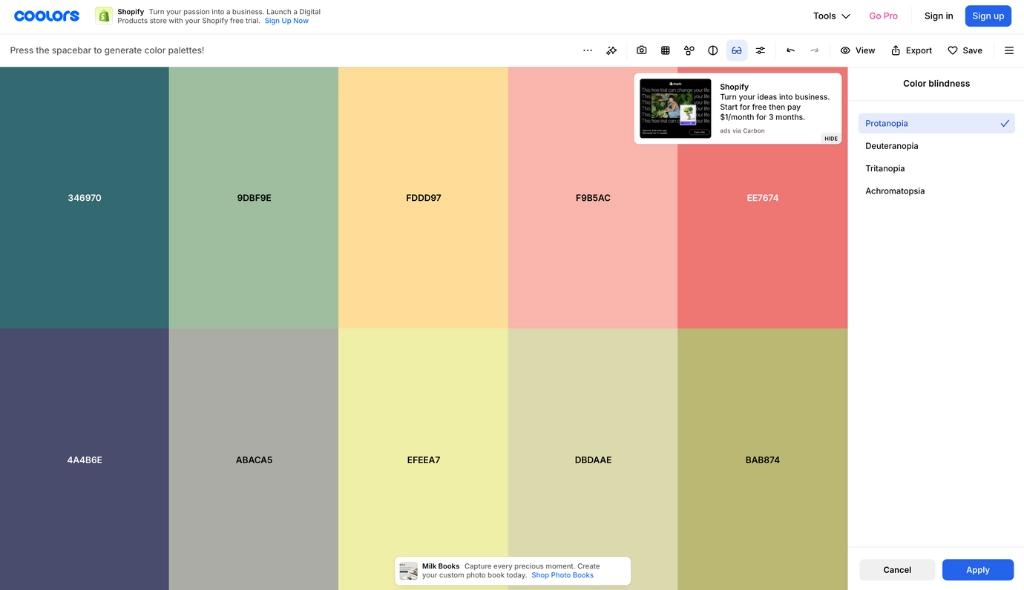
Sometimes it is not even just about usability, but about responsibility as a business owner. For governments and municipalities, it has long been mandatory to ensure that their websites are sufficiently readable for people with visual impairments, among others. This includes things like sufficient colour contrast for people with colour blindness, but also accurate and complete alt text, so that screen readers can explain what is shown in an image. Since mid-2025, however, this legislation has also applied to other organisations. Self-employed professionals and SMEs with up to 10 employees are exempt from this legislation, but let’s be honest: as a business owner, you do not want to exclude anyone intentionally, and you want your website to be accessible to people with visual impairments as well.
Accessability
Colorcontrast
Curious whether your branding or website colours are visible enough for someone with colour blindness, for example? Coolors.co offers a very useful tool that allows you to view your brand colours in colour blindness mode.
SEO
But colour contrast is not the only factor that contributes to accessibility. The structure of the page, the use of alt text, and mobile optimisation also all play a role in making your website accessible. That is why, in 2026, it is almost impossible to approach web design without taking SEO into account. That is why Sweet Selesa delivers all of its websites SEO-ready. This includes things like:
Google no longer looks at words alone, but also at user experience. Curious how your website performs according to Google? With the free PageSpeed tool, you can easily see how Google assesses your website in terms of speed, usability, and SEO value.
Test your own website
Google no longer looks at words alone, but also at user experience. Curious how your website performs according to Google? With the free PageSpeed tool, you can easily see how Google rates your website in terms of speed, usability, and SEO value.
Build your own vs. a professional approach
Many hosting providers now offer the option to build a website using free tools and templates. And in some situations, that can work perfectly well. However, building a website requires a certain level of knowledge and expertise. If you want to focus on a website where user experience, visibility, consistency, SEO, speed, and a well-structured customer journey are all properly in place, it is wise to have a web designer take a look at it. As you have read above, multiple disciplines come together in this process, all of which require expertise and experience. On top of that, as an entrepreneur, you want to focus on what you do best: running your business. A well-designed website is tailor-made, and that is exactly why we at Sweet Selesa focus on your goals and wishes, and create a custom quote based on them. In doing so, we take into account not only your current situation, but also future growth and scalability. This ensures that your website remains relevant, effective, and valuable — also in the long term.
Websitescan
At Sweet Selesa, we help businesses communicate their message through a website that not only tells their story, but can also be actively used as a marketing tool through a combination of technology and functionality. Curious whether your current website is contributing enough to your online success? And how we can improve the customer journey on your website so that it converts? Request a no-obligation website scan today, and you will receive a detailed report with the key areas for improvement on your website.